Kraft Paper Bags
 Kraft Standup Pouches
 Kraft Bowls
 Kraft Food Boxes
 SOS Paper bag
 Bottles & Jars
 Eco Products
 Accessories
Choosing the right kraft paper bag sizes can feel surprisingly tricky when you’re staring at a supplier’s catalog full of numbers, GSM specs, and vague labels like “medium” or “large.” Yet this single decision affects everything from how professional your packaging looks to how much you spend on shipping every month. Whether you run a bakery, a boutique, an e-commerce store, or a gift shop, picking the correct size isn’t just a cosmetic choice — it directly impacts product protection, brand perception, and cost efficiency.
In this guide, we’ll walk through everything you need to know about kraft paper bags, from standard dimensions to custom options, so you can confidently order the size that actually fits your product and your budget. Let’s break it down step by step.
📦 Why Kraft Paper Bag Sizes Matter More Than You Think
At first glance, a paper bag might seem like a minor packaging detail. In practice, size is the single most common mistake businesses make when ordering kraft bags in bulk. A bag that’s too small forces you to cram products in, risking tears and an unprofessional unboxing experience. A bag that’s too large wastes material, looks sloppy on a shelf, and increases shipping costs when you’re mailing orders.
Getting the dimensions right also affects your paper bag GSM/thickness requirements. A heavier item needs both a sturdier size and a higher GSM to prevent sagging or ripping at the bottom seam. This is why serious packaging decisions always start with two questions: what are you packing, and how much weight or volume does it need to hold? Once you answer that, the right kraft bag size for retail stores, cafes, or gift shops becomes much easier to identify.
If you’re also weighing paper against plastic for your packaging strategy, our detailed comparison on the kraft paper bag vs plastic bag debate is worth a read before you finalize your order.
📏 Standard Kraft Paper Bag Sizes – A Quick Reference Chart
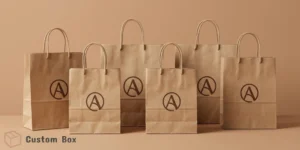
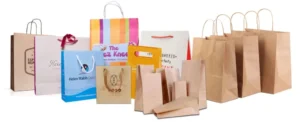
Most suppliers, including us, organize standard kraft bag sizes into small, medium, and large categories, though exact dimensions vary depending on bag style — flat bottom, twisted handle, or SOS bags without handles. Here’s a simplified paper bag sizes chart to give you a practical starting point before diving into custom specifications.
| Size Category | Typical Dimensions | Best Suited For |
|---|---|---|
| Small | 4″x4″x6″ to 6″x4″x9″ | Jewelry, cosmetics, small gifts, samples |
| Medium | 8″x5″x10″ to 10″x7″x12″ | Boutique clothing, bakery items, retail products |
| Large | 12″x8″x16″ and above | Groceries, bulk orders, apparel, large gift sets |
These numbers represent width x depth x height, and slight variations are completely normal across manufacturers. The real value of a chart like this is helping you shortlist a starting category before requesting exact kraft paper bag dimensions for your specific product line.
If you want bags without handles for a more minimal, tuck-style presentation, our SOS paper bags without handles collection covers similar size tiers and works beautifully for bakery and takeaway packaging.
🛍️ Small, Medium, and Large Kraft Bags — Practical Examples
Numbers on a chart only tell half the story, so let’s ground this in real business scenarios. A small kraft bag, roughly the size of a paperback book, is ideal when you’re packaging items like earrings, perfume samples, or small skincare products — anything where the bag itself becomes part of the unboxing delight rather than just a container.
Medium-sized bags are the true workhorses of retail. They comfortably fit folded t-shirts, a few bakery items, or a small gift set, which is why most boutiques and cafes default to this size for everyday customer purchases. Large kraft bags step in when volume matters more than delicacy — think grocery runs, bulk apparel pickups, or corporate gifting where multiple items need to travel together safely.
A few quick examples to make this concrete:
- Small kraft bags for jewelry or gifts — typically paired with rope or ribbon handles for a premium feel.
- Medium bags for boutique packaging — the sweet spot for most retail and cafe checkout counters.
- Large kraft bags for groceries — reinforced bottoms and wider gussets to handle weight without tearing.
You can browse ready-made options directly, including our small kraft paper bag with twisted rope handles, the medium-sized version, and the large kraft paper bag for heavier packing needs.
🏬 Kraft Shopping Bag Sizes for Retail & Boutique Packaging
Retail environments have their own unwritten rules about bag sizing, and getting this wrong is more common than you’d think. Walk into any well-branded boutique and you’ll notice the bag size almost always matches the product category exactly — smaller stores selling accessories use compact bags, while clothing retailers lean toward medium-to-large sizes that comfortably fit folded garments without excessive empty space.
This matters because kraft shopping bag sizes influence how customers perceive value. An oversized bag with a single small item inside can feel wasteful or careless, while a snug, well-proportioned bag signals attention to detail. If you’re building a retail brand identity, it’s worth reviewing our guide on custom packaging solutions in Pakistan to see how sizing ties into broader branding decisions.
For businesses selling through cafes or takeaway counters, single and double-handle carrier bags are another popular format worth considering alongside standard kraft bags, especially for drink or food combo orders.
🥖 Kraft Bags for Food, Bakery & Grocery Packaging
Food packaging brings its own size logic entirely. Grocery paper bags need wider bases and reinforced gussets to distribute weight evenly, while bakery bags prioritize breathability and a snug fit that keeps items like bread or pastries from sliding around and losing shape during transport.
Bakeries in particular tend to order a mix of sizes since product lines vary so widely — a single cookie needs a completely different bag than a dozen cupcakes or a full cake. If you’re managing a bakery’s packaging lineup, our kraft paper cookie bags and goodie bags are practical additions worth exploring alongside your main size chart.
For grocery and food delivery businesses specifically, durability matters just as much as dimensions. Pairing the correct size with adequate paper bag GSM/thickness prevents oil stains, sogginess, or bottom blowouts — a lesson every food business learns quickly once they scale beyond a handful of daily orders.
🧵 Kraft Paper Bag Dimensions, GSM & Thickness Explained
Size and thickness are two separate decisions that businesses often confuse. Dimensions determine what fits inside the bag, while GSM (grams per square meter) determines how much weight the bag can safely carry without stretching or tearing. A large bag made from thin, low-GSM paper will fail under the same load a smaller, higher-GSM bag handles easily.
As a general rule, lightweight items like small gifts or jewelry work fine with standard 70-90 GSM kraft paper, while grocery bags, bakery bags carrying multiple items, or anything with sharp edges benefit from 120 GSM or higher. If you’re unfamiliar with how thickness specifications actually translate to real-world durability, our detailed GSM guide for packaging breaks this down clearly with practical benchmarks for different industries.
It also helps to measure your actual product before ordering rather than estimating. Our guide on how to measure length, width, and height correctly applies just as well to bags as it does to boxes, and it’s a step most first-time buyers unfortunately skip.
🎨 Custom Kraft Paper Bags — When Standard Sizes Aren’t Enough
Standard sizing works well for generic products, but branded businesses eventually outgrow off-the-shelf options. This is where custom kraft paper bags enter the picture, offering complete control over dimensions, gusset width, handle style, and printed branding, all tailored to a specific product line rather than a generic category.
The comparison between standard vs custom kraft bag sizes usually comes down to order volume and brand maturity. Small businesses testing the market often start with standard sizes to keep costs manageable, then transition to custom dimensions once their product packaging needs stabilize and branding becomes a priority. Custom sizing also solves awkward packaging problems — irregularly shaped products, oversized items, or unusual weight distributions that standard bags simply weren’t designed to handle.
If you’re exploring pouch-style alternatives alongside bags, our kraft pouch sizes guide and custom kraft pouches buying guide offer useful parallel insights, since many businesses end up using both formats across different product lines.
🏭 Buying Kraft Paper Bags Wholesale — What Changes at Scale
Ordering kraft paper bags wholesale introduces a different set of considerations entirely. At bulk volumes, even small dimensional inefficiencies multiply into significant material waste and cost, which is why wholesale buyers typically work with suppliers to fine-tune sizing before committing to large production runs.
Bulk orders also open the door to better customization pricing, since kraft paper bag manufacturers often reserve their best rates for higher minimum quantities. If your business is scaling toward wholesale ordering, it’s worth connecting directly with established suppliers rather than relying solely on generic size charts. You can explore trusted packaging suppliers in Karachi and packaging suppliers in Lahore for region-specific sourcing options.
One practical tip worth mentioning: always request physical samples before finalizing a wholesale order. Screen colors and spec sheets rarely capture how a brown kraft paper bag actually feels and holds up in hand.
🌱 Eco-Friendly and Biodegradable Kraft Paper Bags
Sustainability has moved from a nice-to-have to a genuine purchasing driver for most retail and food businesses today. Biodegradable paper bags and recyclable paper bags made from kraft paper naturally align with this shift, since the material breaks down far more responsibly than plastic alternatives while still offering solid strength for everyday packaging needs.
Choosing the right size actually supports sustainability goals too — a properly sized bag uses exactly the material needed, avoiding the excess paper waste that comes from consistently over-ordering larger sizes than necessary. For businesses building a genuinely eco-friendly packaging identity, our article on eco-friendly packaging trends in Pakistan covers how sizing, material choice, and branding come together as a complete sustainability strategy rather than isolated decisions.
Kraft paper also supports paper bag industrial uses beyond retail — from fragile item wrapping to protective interior padding. If you handle delicate products regularly, our guide on how to pack fragile items using kraft paper is a practical companion resource.
✅ How to Choose the Right Kraft Bag Size — A Simple Decision Framework
By now you’ve seen the size charts, the use cases, and the material considerations, so let’s condense everything into a straightforward decision process you can actually apply before placing your next order.
- Measure your product first, including any padding or wrapping it needs inside the bag.
- Match GSM to weight, not just to size — heavier products need thicker paper regardless of bag dimensions.
- Consider handle style based on how customers will carry the bag, since handle placement affects usable capacity.
- Order samples before bulk buying, especially if you’re testing a new size or supplier for the first time.
This simple framework alone eliminates most of the common sizing mistakes businesses run into, whether they’re ordering for a single boutique location or scaling toward wholesale volumes.
🧠 Which Kraft Bag Size Is Best for Your Business?
There’s no single universal answer here, and that’s actually the most important takeaway from this entire guide. A jewelry brand and a grocery store have completely different sizing needs, even though both might reasonably call their packaging a “kraft bag.” The best approach is always to start from your product’s actual dimensions and weight, then work backward toward the size category and GSM that comfortably accommodates it with a small margin for safety.
If you’re still unsure after measuring your product, reaching out directly to a packaging specialist is often faster than guessing from a chart alone. Suppliers who work with kraft paper daily can usually recommend a size within minutes based on a quick product description, saving you from costly reorders later.
🎯 Final Thoughts
Kraft paper bag sizing isn’t complicated once you break it down into its core components — product dimensions, weight, GSM, and intended use. What trips most businesses up is skipping the measuring step and guessing based on generic labels like “small” or “large,” which vary enough between suppliers to cause real fitting problems down the line.
Whether you’re packaging delicate jewelry, bakery treats, or bulk grocery orders, matching the right kraft paper bag size to your product protects both your items and your brand reputation. And if standard sizes don’t quite fit your product line, custom kraft paper bags remain a reliable way to get exactly the dimensions your business needs.
Ready to find your perfect kraft bag size? Explore our full range of kraft paper bags and kraft paper bag category, or reach out to our packaging team for a quick, personalized size recommendation based on your exact product needs.
❓ Frequently Asked Questions
Q1: What is the most common kraft paper bag size for retail businesses? Medium-sized bags, roughly 8″x5″x10″ to 10″x7″x12″, are the most commonly used size for boutique clothing, bakery items, and general retail packaging.
Q2: How do I know what GSM my kraft paper bag needs? Lighter items like jewelry or gifts work well with 70-90 GSM paper, while heavier products such as groceries or multiple bakery items need 120 GSM or higher for durability.
Q3: Can I get custom kraft paper bag sizes for my specific product? Yes, custom kraft paper bags allow full control over dimensions, gusset width, and handle style, making them ideal when standard sizes don’t fit your product properly.
Q4: Are kraft paper bags better than plastic bags for the environment? Kraft paper bags are biodegradable and recyclable, making them a more sustainable choice compared to plastic, especially when sized correctly to minimize material waste.
Q5: What size kraft bag should I order for wholesale grocery packaging? Large kraft bags, typically 12″x8″x16″ or bigger with reinforced bottoms, are best suited for wholesale grocery packaging due to their weight-carrying capacity.