Kraft Paper Bags
 Kraft Standup Pouches
 Kraft Bowls
 Kraft Food Boxes
 SOS Paper bag
 Bottles & Jars
 Eco Products
 Accessories
Starting a food business is exciting — but between perfecting your recipes and setting up your kitchen, packaging often gets pushed to the back burner. That’s a costly mistake. If you’re launching a food brand, following a complete packaging checklist for your new food business isn’t just helpful — it’s essential for compliance, customer trust, and long-term growth. Whether you’re selling homemade jams, baked goods, spices, or ready-to-eat meals, the right packaging protects your product, communicates your brand, and keeps you legally safe.
Let’s walk through every critical step — from choosing food-safe materials to printing compliant labels — so you can launch with confidence.
✅ Step 1: Understand Your Food Packaging Requirements
Before you buy a single box or pouch, you need to understand what packaging requirements apply to your food business. These vary based on your product type, target market, and distribution channel.
What Packaging Do You Need to Start a Food Business?
Ask yourself these questions first:
- Is my product dry, liquid, frozen, or perishable?
- Will it be sold retail, online, or at a farmers market?
- Does it need to be tamper-evident or airtight?
- What is the expected shelf life?
- Am I selling locally or exporting?
Your answers will determine everything — from the type of container to the labeling format. For example, a dry spice blend needs different packaging than a liquid pickle or a baked cake.
Food Safety Regulations to Know
- Products must be packed in food-grade packaging materials only
- Labels must comply with FDA food labeling requirements (or your country’s equivalent authority)
- Packaging must not contaminate or chemically react with the food
- Tamper-evident features are required for most retail products
💡 Pro Tip: If you’re selling packaged food in Pakistan, PSQCA and DRAP guidelines apply alongside general food safety laws.
📦 Step 2: Choose the Right Packaging Materials
This is where most new food entrepreneurs get overwhelmed — and overspend. The key is matching your packaging material to your product’s needs, not just picking what looks pretty.
Food Grade Packaging Materials — Your Options
Here’s a quick breakdown of the most common food packaging materials:
| Material Type | Best For | Key Benefit |
|---|---|---|
| Kraft Paper Pouches | Dry goods, spices, coffee, cookies | Eco-friendly, premium look |
| Aluminum Foil Pouches | Snacks, coffee, pickles | Excellent barrier, long shelf life |
| Clear Plastic Containers | Salads, deli items, desserts | Visibility, tamper-evident |
| Tin Boxes | Dry fruits, chocolates, cookies | Reusable, premium gifting |
| Kraft Bowls | Soups, biryanis, fast food | Biodegradable, heat-resistant |
| Stand-Up Pouches | Liquids, sauces, powders | Space-efficient, resealable |
| Pizza Boxes | Pizza, flatbreads | Grease-resistant, sturdy |
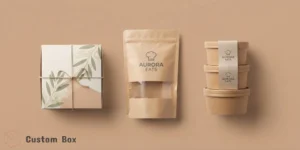
For dry food products like spices, nuts, or coffee, kraft stand-up pouches are one of the most popular and cost-effective choices. They’re resealable, look professional, and come in multiple sizes.
For bakery items like cakes, cupcakes, and brownies, you’ll need proper bakery packaging that protects the product and maintains presentation.
For fast food or restaurant startups, options like kraft food boxes, pizza boxes, and kraft bowls are must-haves.
What Materials Are Safe for Food Packaging?
Only use materials that are:
- ✅ BPA-free plastics (food-grade)
- ✅ Food-safe kraft paper and cardboard
- ✅ Virgin aluminum foil (not recycled)
- ✅ Certified food-grade tin
- ❌ Avoid: newspaper, regular plastic bags, non-food-grade containers
🏷️ Step 3: Master Food Packaging Labeling Requirements
This is the most legally critical part of your food business packaging checklist. A beautiful package with an incomplete label can get your product pulled from shelves — or worse, result in a fine.
What Information Is Required on a Food Label?
Every packaged food product must include:
- Product Name — Clear and accurate description
- Ingredient List — Listed in descending order by weight
- Allergen Labeling — Highlight common allergens (nuts, gluten, dairy, etc.)
- Nutrition Facts Label — Required for most retail products
- Net Weight Declaration — In grams, kg, ml, or liters
- Manufacturer Name & Address — Full business name and contact
- Country of Origin — Where the product was made
- Manufacturing & Expiry Date — Food product expiry date labeling is mandatory
- Storage Instructions — “Keep refrigerated,” “Store in a cool dry place,” etc.
- Batch/Lot Number — For traceability in case of recalls
How to Label Homemade Food Products for Selling
Even if you’re running a home-based food business, your labels must meet the same standards as commercial products. You don’t need fancy printing to start — a professionally designed printed sticker with all required information is perfectly acceptable.
For liquid products like sauces, juices, or pickles, consider stand-up pouches for pickle or spout pouches that allow easy labeling on a flat surface.
🔒 Step 4: Ensure Food Safety & Compliance Packaging
Your packaging must do more than look good — it must protect the product and prove it hasn’t been tampered with.
Tamper-Evident Packaging — Why It Matters
Tamper-evident packaging is not just a regulatory requirement in many markets — it’s a trust signal for customers. Options include:
- Shrink bands around jar lids
- Heat-sealed pouches that show visible damage if opened
- Induction-sealed containers
- Zip-lock resealable bags with first-open indicators
For products that need an extra layer of protection, retort pouches are excellent — they’re heat-processed, tamper-evident, and extend shelf life significantly.
Airtight & Vacuum Sealed Food Packaging
For products sensitive to moisture or oxidation:
- Use airtight food containers or vacuum-sealed bags
- Stand-up pouches with valve are perfect for coffee and roasted products — the one-way valve releases CO₂ without letting oxygen in
- Aluminum foil stand-up pouches provide maximum barrier protection for spices, dry fruits, and snacks
🎨 Step 5: Design Packaging That Sells
Your packaging is your silent salesperson. On a retail shelf or an e-commerce product page, you have about 3 seconds to grab attention. Make them count.
How to Make Food Packaging Look Professional
Follow these design principles:
- Brand consistency — Use the same colors, fonts, and logo across all packaging
- Clear product name — Shoppers should instantly know what they’re buying
- Appetite appeal — Use high-quality product photography or illustrations
- Hierarchy — Product name first, then key benefit, then details
- White space — Don’t clutter; clean designs look more premium
Packaging Design for Your Food Brand
For premium gifting products like chocolates, dry fruits, or sweets, consider tin boxes or acrylic boxes — they elevate perceived value instantly.
For everyday retail products, kraft stand-up pouches with window let customers see the product while maintaining a premium, eco-conscious look.
For bakery startups, cake boxes with transparent windows and cupcake boxes create a beautiful unboxing experience.
🌿 Step 6: Consider Eco-Friendly Packaging Options
Consumers today actively choose brands that care about the environment. Integrating eco-friendly food packaging into your strategy isn’t just ethical — it’s a competitive advantage.
Is Eco-Friendly Packaging Required for Food Businesses?
It’s not legally mandatory in most regions, but it’s increasingly expected. Many retailers now require suppliers to use sustainable packaging. More importantly, eco-friendly packaging can be a powerful marketing differentiator.
Biodegradable & Sustainable Options
- Kraft paper pouches — Recyclable and compostable
- Kraft bowls and boxes — Made from recycled materials
- Compostable biodegradable paper plates — Perfect for food service
- Wooden cutlery — Birchwood spoons, forks, and stir sticks
- Paper straws instead of plastic — 6mm paper straws are a simple swap
Switching to eco-friendly packaging also reduces your long-term costs as paper and kraft materials are often cheaper in bulk than specialty plastics.
🛒 Step 7: Get Retail-Ready — Barcodes, SKUs & Shelf Presentation
(This is the step most new food businesses skip — and it costs them retail opportunities.)
How Do I Add a Barcode to My Food Product?
To sell in retail stores, your product needs:
- A registered barcode (UPC/EAN) — Register with GS1 in your country
- A unique SKU for inventory management
- Retail-ready packaging — Must stand upright, stack neatly, and display clearly
Retail-Ready Food Packaging Checklist
- ✅ Barcode visible and scannable from the front or back
- ✅ Product name readable from 3 feet away
- ✅ Packaging stands upright on shelf without support
- ✅ Consistent sizing across product range
- ✅ Price sticker space available
- ✅ Minimum order quantities match retailer requirements
For food service businesses selling to restaurants or cafes, food packaging boxes and transparent food containers need to be stackable and clearly labeled with contents and date.
📋 Step 8: Build Your Complete Food Packaging Materials List
Here’s your master food packaging materials list to source before launch:
Primary Packaging (Direct Contact with Food)
- Pouches (kraft, aluminum, clear, spout) — Browse all kraft pouches
- Boxes (cake, bakery, burger, pizza) — Browse food packaging boxes
- Containers (plastic, kraft bowls, deli boxes) — Browse black food containers
- Jars and bottles (plastic, acrylic, tin) — Browse round plastic jars
- Cups and glasses (coffee cups, cold drink cups) — Browse coffee cups
Secondary Packaging (Outer Protection & Branding)
- Kraft paper bags — Browse kraft paper bags
- Cake boards and drum boards — Browse cake boards
- Tin boxes for gifting — Browse tin boxes
- E-commerce shipping boxes — Browse e-commerce boxes
Sealing & Protective Materials
- Packaging tape (2-inch and 3-inch)
- Bubble wrap for fragile items
- Shrink wrap rolls
- Packing rope
⚠️ Common Food Packaging Mistakes to Avoid
Even experienced food entrepreneurs make these errors. Here’s what to watch out for:
- Using non-food-grade materials — Always verify food safety certification
- Incomplete labels — Missing expiry date or allergen info is a compliance violation
- Wrong packaging size — Too much headspace looks cheap; too tight damages the product
- Ignoring shelf life testing — Package your product and test it at room temperature before launch
- Skipping tamper-evident features — This kills customer trust instantly
- Not ordering samples first — Always test packaging before bulk ordering
- Underestimating packaging costs — Budget 10–15% of product cost for packaging
🚀 Final Food Business Launch Packaging Checklist
Before you go live, run through this final checklist:
Legal & Compliance
- All label information complete and accurate
- Allergen labeling clearly visible
- Expiry/manufacturing date system in place
- Barcode registered (if selling retail)
Materials & Sourcing
- Food-grade packaging sourced and tested
- Tamper-evident features in place
- Eco-friendly options considered
- Bulk pricing negotiated with supplier
Branding & Design
- Logo and brand colors consistent
- Product photography ready
- Label design approved and printed
- Packaging looks professional on shelf and in photos
Operations
- Packaging storage space organized
- Sealing equipment ready (heat sealer, tape gun)
- Shipping boxes sourced for e-commerce orders
- Sample packs prepared for retailer pitches
💡 Conclusion: Your Packaging Is Your First Impression
Packaging isn’t just a container — it’s the first physical experience your customer has with your brand. A well-executed food startup packaging strategy builds trust, ensures compliance, and drives repeat purchases. From choosing the right food-grade pouches to nailing your label requirements, every detail matters.
The good news? You don’t have to figure it all out alone. CustomBox.pk offers a complete range of food packaging solutions — from kraft stand-up pouches and bakery boxes to eco-friendly containers and tin boxes — all in one place, at competitive prices.
🛍️ Ready to Package Your Food Business the Right Way?
Browse our full range of food packaging solutions at CustomBox.pk and order today. Fast delivery, bulk pricing available, and expert support for new food businesses.