Kraft Paper Bags
 Kraft Standup Pouches
 Kraft Bowls
 Kraft Food Boxes
 SOS Paper bag
 Bottles & Jars
 Eco Products
 Accessories
If you have ever opened a bag of coffee only to find it smelling flat, stale, or oddly papery, the roast probably was not the problem — the packaging was. Learning how to choose the right coffee bag is one of the most overlooked decisions a roaster, café owner, or home brewer can make, yet it directly determines whether your beans taste as good on day thirty as they did on day one. The right coffee bag for roast preservation is not just a container; it is a small, engineered environment designed to fight off oxygen, moisture, and light — the three enemies of great coffee. In this guide, we will walk through everything you need to know about coffee packaging bags, from materials and valves to shapes and sustainability, so you can make a confident, informed choice for your beans.
☕ Why Your Coffee Bag Choice Matters More Than You Think
Coffee is one of the most sensitive food products on the planet when it comes to storage. The moment beans are roasted, they begin releasing carbon dioxide in a process called degassing, and at the same time, they start absorbing oxygen and moisture from the surrounding air. This chemical dance is what eventually leads to staleness. A poorly chosen bag speeds up this decline, while a well-designed one slows it down dramatically, sometimes extending shelf life by weeks or even months.
For roasters and café owners in Pakistan, this is not a small detail. It affects customer satisfaction, brand reputation, and repeat purchases. A customer who buys a bag of coffee that tastes stale within a week is unlikely to buy from that brand again, no matter how good the actual roast was. This is why so many established coffee brands invest heavily in their packaging strategy, treating it as seriously as the roasting process itself. If you are just getting started, our guide on how to start a coffee business in Pakistan covers this exact intersection of product quality and packaging strategy in more detail.
🧪 Understanding the Basics: What Makes a Coffee Bag “Right” for Your Roast
Not every coffee bag is created equal, and not every roast has the same packaging needs. Before diving into materials and features, it helps to understand the underlying science of why certain bags work better for certain coffees.
The Role of Roast Freshness in Packaging Decisions
Freshly roasted coffee releases carbon dioxide for several days after roasting. If it is sealed in an airtight bag with no way for this gas to escape, the bag can swell, burst, or even push open the seal, letting in oxygen in the process. This is precisely why coffee roast packaging almost always includes a mechanism to release gas without letting outside air in. Without this feature, even the most beautifully printed bag becomes a liability rather than an asset.
Light Roast vs Dark Roast Packaging Needs
Interestingly, roast level also plays a role in how quickly coffee degrades. Darker roasts have more surface oil and a more porous structure, which makes them slightly more vulnerable to oxidation and rancidity. Lighter roasts, on the other hand, tend to retain more of their volatile aromatic compounds, which are the first things lost when a bag fails to seal properly. This means a bag that works beautifully for a dark roast espresso blend might not be the ideal choice for a delicate, single-origin light roast meant to showcase floral or fruity notes.
🎯 Key Factors to Consider When Choosing Coffee Packaging Bags
Once you understand the basic science, the next step is translating that into practical purchasing decisions. Several factors work together to determine whether a bag will actually protect your roast or quietly let it fade.
Material Matters: Kraft, Foil, and Laminated Options
The material of your coffee bag affects everything from barrier protection to shelf appeal. Kraft paper coffee bags have become extremely popular because they offer a natural, artisanal look that resonates with specialty coffee buyers, and they are often paired with an inner lining for added protection. Foil lined coffee bags, meanwhile, provide a much stronger barrier against light, oxygen, and moisture, making them ideal for coffee that needs a longer shelf life or is being shipped over long distances.
If you are unsure which material suits your brand, our detailed kraft paper bag versus plastic bag comparison breaks down the practical differences in durability, cost, and environmental impact. For roasters who want the best of both worlds, laminated kraft options combine the rustic exterior of paper with a foil or poly lining inside, giving you visual appeal without sacrificing performance. You can explore ready-made options like the kraft paper with aluminum lamination pouch if you want a packaging solution that already balances both needs.
The Importance of a Degassing Valve
A degassing valve, sometimes simply called a one-way valve, is a small plastic fitting on the bag that allows carbon dioxide to escape while preventing oxygen from entering. This single feature is arguably the most important element in any serious coffee packaging setup. Without it, freshly roasted beans packed in an airtight bag can cause the seal to fail within days. Valve coffee bags have essentially become the industry standard for a reason — they let the coffee “breathe” safely without compromising freshness.
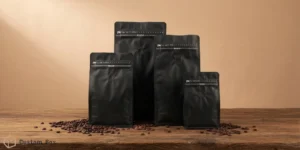
If you are sourcing packaging for your roastery, browsing options like the black stand-up pouches with valve collection gives you a good sense of how this feature is typically integrated into modern coffee bag designs.
Bag Shape and Structure: Flat Bottom vs Stand-Up Pouches
Shape might seem like a purely aesthetic choice, but it actually influences shelf presence, storage efficiency, and even how well the bag protects the coffee. Flat bottom coffee bags stand upright on their own, offering excellent shelf visibility in retail environments, while also providing a wider surface for branding and printing. Stand up pouch coffee packaging, more broadly, tends to use less material relative to volume compared to traditional rigid packaging, which can reduce both cost and environmental footprint.
For roasters who sell primarily online or through subscription boxes, a compact stand-up pouch with a resealable zip is often more practical than a flat-bottom bag, since it is easier to pack and ship. If you are exploring your options, our kraft stand-up pouches page showcases several structural variations worth comparing side by side.
🛡️ How Coffee Bags Preserve Freshness and Aroma
The entire purpose of good coffee packaging bags boils down to one goal: preserving freshness and coffee aroma preservation for as long as possible. This happens through a combination of barrier protection, controlled gas exchange, and light blocking.
Airtight seams and airtight coffee packaging construction prevent oxygen from creeping in through the edges of the bag, which is often where cheaper packaging fails first. Meanwhile, moisture barrier bags stop humidity from seeping through the material itself, which is especially important in humid climates where ambient moisture can quietly ruin an entire batch of beans over a few weeks. Some premium roasters go a step further by using nitrogen flushed bags, where the air inside the bag is replaced with inert nitrogen gas before sealing, effectively removing the oxygen that would otherwise accelerate staling.
We covered this topic in more depth in our article on how coffee packaging preserves freshness and aroma, which explores the chemistry behind aroma retention in far greater detail if you want to go deeper into the science.
🌱 Eco-Friendly vs Traditional Coffee Bag Materials
Sustainability has become a genuine purchasing driver, not just a marketing buzzword, and coffee buyers are increasingly asking whether their favorite roaster uses eco-friendly coffee packaging. The challenge is that eco-friendly materials sometimes come with trade-offs in barrier performance, so it helps to understand exactly what you are gaining and giving up with each option.
| Material Type | Freshness Protection | Sustainability | Best For |
|---|---|---|---|
| Plain Kraft Paper | Moderate | High | Short shelf-life, artisanal branding |
| Foil-Lined Kraft | High | Moderate | Specialty coffee needing longer shelf life |
| Pure Aluminum Foil Pouch | Very High | Low | Export or bulk commercial roasting |
| Compostable Laminate | Moderate to High | Very High | Eco-conscious specialty brands |
As the table shows, there is rarely a single “perfect” material — it depends on how long your coffee needs to stay fresh, how far it will travel, and how important sustainability messaging is to your brand identity. Many Pakistani roasters are now shifting toward hybrid solutions, and our piece on eco-friendly custom packaging in Pakistan explores how brands are balancing these priorities without compromising shelf performance.
📦 Best Bags for Different Roasters: Home Brewers to Commercial Roasters
The needs of a small home-based roaster are quite different from those of a commercial coffee brand shipping thousands of bags monthly, and coffee bags for roasters should reflect that scale.
Small-batch and home roasters often prioritize flexibility and lower minimum order quantities, favoring simpler kraft pouches with a basic valve and a resealable zip. These smaller operations benefit most from resealable coffee bags, since customers are more likely to buy smaller quantities and need the bag to stay fresh across multiple uses rather than being opened and consumed in one sitting.
Commercial roasters, on the other hand, typically move toward specialty coffee packaging with custom printing, precise sizing, and higher-barrier materials because their coffee travels further and sits on shelves longer before purchase. For these businesses, working with a custom coffee bags supplier that can offer consistent quality across large print runs becomes essential. If your brand falls into this category, exploring our custom kraft pouches buying guide can help you understand sizing, minimum orders, and printing options before you commit to a supplier.
🔍 Common Mistakes to Avoid When Selecting a Coffee Bag
Even experienced roasters sometimes make avoidable mistakes when choosing packaging, often because they prioritize appearance over function. One common error is choosing a beautiful but thin kraft bag without any lining, which looks great on a shelf but fails to protect the coffee once it sits in a warm storeroom for a few weeks. Another frequent mistake is skipping the valve entirely to save cost, not realizing that this single omission can cause bags to swell and eventually rupture within days of packing.
Sizing is another overlooked detail. Using an oversized bag for a small quantity of coffee leaves excess air trapped inside, which accelerates oxidation even with a good barrier material. It genuinely pays to consult a coffee bag material guide or a trusted supplier before finalizing your packaging, rather than guessing based on appearance alone. Our resource on kraft pouch sizes is a practical starting point for getting the proportions right the first time.
🧾 Coffee Bag vs Coffee Canister: Which Keeps Coffee Fresher?
This is a question that comes up often, especially among home brewers deciding how to store their beans after purchase. A coffee bag vs coffee canister freshness comparison usually comes down to how the two handle air exposure over repeated use.
A well-made valve bag, kept sealed with its zip closure, generally performs better than an open canister because it minimizes the surface area exposed to air each time it is opened. Canisters, while convenient and often more attractive on a kitchen counter, tend to let in a larger volume of fresh air every time the lid is removed, which gradually accelerates staling. That said, a high-quality airtight canister with a one-way valve of its own can match or even exceed the performance of a basic bag. The real answer, ultimately, depends less on the container type and more on how consistently it blocks air and light between uses.
✅ Quick Checklist Before You Buy
Before finalizing your coffee bag supplier, it helps to run through a short mental checklist to make sure you are not missing any critical feature.
- Does the bag include a functioning degassing valve?
- Is the material appropriate for your expected shelf life — kraft, foil-lined, or fully laminated?
- Does it offer a resealable closure for repeat use by the customer?
- Is the roast date printing area clearly designed into the bag layout?
- Does the size match your typical fill weight without excess trapped air?
Running through these five points takes only a minute but can save you from a costly packaging mistake that affects hundreds or thousands of units.
💡 Final Thoughts: Choosing the Right Bag Is Choosing Better Coffee
At the end of the day, learning how to choose the right coffee bag is really about respecting the work that went into roasting the coffee in the first place. All the careful sourcing, roasting precision, and quality control mean very little if the final packaging lets that freshness slip away before it ever reaches a cup. Whether you are a home roaster experimenting with small batches or a growing brand shipping nationwide, investing a little extra thought into your coffee bag for roast selection pays off in customer satisfaction, repeat orders, and a stronger overall brand reputation.
If you are ready to upgrade your packaging with a supplier who understands both the science and the branding side of specialty coffee, explore the full range of coffee packaging bags available at CustomBox.pk’s shop, where you can find valve pouches, kraft standup bags, and fully custom printed options tailored to your roast and your brand.
❓ Frequently Asked Questions
What type of bag is best for coffee beans? Valve-equipped stand-up pouches made from foil-lined kraft paper are generally considered the best all-around option, since they combine strong barrier protection with a mechanism to safely release carbon dioxide.
How do coffee bags keep coffee fresh? They rely on airtight seals, moisture barriers, and one-way valves to block oxygen and humidity while allowing natural gases from the roasting process to escape without letting outside air back in.
Why do coffee bags have valves? Freshly roasted coffee releases carbon dioxide for days after roasting, and a valve lets this gas escape safely without compromising the airtight seal that keeps oxygen out.
What is the best material for coffee packaging? Foil-lined kraft paper is widely regarded as the best balance between barrier performance and aesthetic appeal, though pure aluminum foil offers the strongest protection for long-distance shipping.
How long does coffee stay fresh in a bag? Properly sealed valve bags with good barrier materials can keep coffee fresh for four to twelve months, depending on roast level and storage conditions.
What is a degassing valve on coffee bags? It is a small one-way valve fitted into the bag that allows carbon dioxide produced during roasting to escape while preventing outside oxygen from entering.
How to store roasted coffee properly? Store coffee in its original sealed valve bag, away from direct sunlight and heat, and reseal it tightly after each use to minimize air exposure.
How to pick coffee packaging for a small roastery? Start with a flexible kraft valve pouch in a moderate size range, prioritize resealability, and scale up to custom printed options as your order volume grows.
Coffee bag vs coffee canister — which keeps coffee fresher? A sealed valve bag generally retains freshness better between uses than an open canister, unless the canister itself has its own airtight seal and valve.