Kraft Paper Bags
 Kraft Standup Pouches
 Kraft Bowls
 Kraft Food Boxes
 SOS Paper bag
 Bottles & Jars
 Eco Products
 Accessories
Colors talk before your product ever says a word. That’s the entire idea behind packaging color psychology — the science of how color choices on a box, pouch, or wrapper silently shape what a customer feels, trusts, and ultimately buys. In Pakistan’s fast-growing retail and e-commerce landscape, this isn’t just design theory anymore; it’s a real sales lever. Brands that understand what colors sell in Pakistan consistently outperform competitors who treat packaging as an afterthought, simply because color triggers emotion faster than text or price ever can.
This guide breaks down the psychology behind packaging colors, how cultural context shapes buying behavior in Pakistan, and which shades actually move products off the shelf — whether you’re packaging bakery items, cosmetics, or festive gift sets.
🎨 What Is Packaging Color Psychology?
Packaging color psychology is the study of how specific colors influence human perception, mood, and decision-making at the point of purchase. Long before a customer reads your brand name or checks the price tag, their brain has already formed an opinion based on color alone. Research in consumer psychology consistently shows that people make snap judgments about a product within seconds of seeing it, and color is responsible for a huge share of that first impression.
This matters because packaging isn’t just protective material — it’s a silent salesperson. A red box can spike appetite and urgency. A green pouch can whisper “natural” and “healthy” without a single word of copy. A gold foil can instantly signal premium quality, even before the customer touches the product. This emotional shortcut is why global brands invest heavily in color testing, and why local Pakistani businesses are increasingly following suit with custom printed packaging boxes designed around specific emotional triggers.
Understanding this psychology gives small and medium businesses in Pakistan a real competitive edge — because you don’t need a massive marketing budget to influence buying behavior. You just need the right color on the right product.
🇵🇰 Why Color Psychology Matters in the Pakistani Market
Color meaning isn’t universal — it shifts depending on culture, religion, and regional habits. This is exactly why cultural color preferences in Pakistan play such a decisive role in packaging success. A color that performs brilliantly in a Western market might carry a completely different emotional weight here.
For instance, white in many Western contexts symbolizes purity, but in South Asian culture it can also carry associations with mourning in certain contexts, while simultaneously representing peace and simplicity in Pakistan’s national identity. Green, on the other hand, holds deeply positive religious and patriotic weight in Pakistan, tied to Islam and the national flag, making it one of the most trusted colors for food and halal-certified products.
This cultural layering means Pakistani brands can’t simply copy international color trends. Local buying behavior is shaped by:
- Religious symbolism (green, white, black in Islamic and cultural contexts)
- Festive associations (gold and red during Eid, weddings, and celebrations)
- Regional retail habits, where bold, vibrant colors often outperform muted minimalist tones in mass-market FMCG
Brands that study these nuances — rather than importing packaging design blindly — see measurably better shelf performance. This is a core reason why local packaging design in Pakistan increasingly leans toward customized, culturally-tuned color strategies rather than generic global templates.
🔴 What Colors Sell in Pakistan? A Breakdown by Emotion and Category
Different colors trigger different psychological responses, and in the Pakistani retail environment, certain shades consistently outperform others depending on the product category. Here’s a practical breakdown of how the psychology of colors in branding plays out locally.
Red remains one of the strongest performers across food, snacks, and beverage packaging because it stimulates appetite and creates urgency — which is exactly why it dominates fast food and biryani packaging shelves. Green carries a dual advantage in Pakistan: it signals “natural” or “organic” globally, while also resonating with religious and national identity locally, making it a top choice for herbal products, dairy, and halal-certified food packaging. Gold and its metallic cousins signal premium quality and are almost mandatory for cosmetics, dry fruits, and gifting boxes, especially around Eid and wedding seasons. Blue builds trust and calm, which explains its popularity in dairy, pharmaceutical, and personal care packaging. Yellow grabs attention faster than almost any other color, making it a favorite for budget-friendly snacks and promotional packaging aimed at impulse buyers.
| Color | Psychological Effect | Best Used For (Pakistan Market) |
|---|---|---|
| Red | Appetite, urgency, excitement | Fast food, spices, biryani & snack packaging |
| Green | Trust, natural, halal association | Dairy, herbal products, organic food |
| Gold | Luxury, premium, celebration | Cosmetics, dry fruits, Eid & wedding gifts |
| Blue | Calm, trust, reliability | Dairy, pharma, skincare |
| Yellow | Attention, energy, affordability | Snacks, kids’ products, promotions |
| White/Black | Minimalism, elegance, modern appeal | Premium cosmetics, tech, boutique brands |
This table isn’t just theory — it reflects real shelf behavior across Karachi, Lahore, and Islamabad retail markets, where color-led purchase decisions happen in seconds, not minutes.
🛒 How Color Affects Buying Decisions in Real Life
Consumer buying behavior and colors are more tightly linked than most business owners realize. Picture a customer scrolling Daraz or walking through a grocery aisle — they’re not reading ingredient lists first. They’re reacting to color, then shape, then branding, and only after that do they check details. This sequence is why packaging color often determines whether a product even gets picked up in the first place.
Take bakery packaging as a practical example. A brown kraft box with warm, earthy tones instantly communicates “fresh” and “homemade,” which is why so many local bakeries have shifted toward kraft-based custom food packaging boxes instead of plain white cartons. Similarly, cosmetic brands packaging skincare in soft pastels or matte black with gold foil instantly position themselves as premium, even if the price point is mid-range — a strategy widely used in custom cosmetic boxes across Pakistan.
E-commerce sellers face a slightly different challenge. Since customers unbox products at home rather than in-store, color psychology extends into the entire unboxing experience — from the outer shipping box to the inner tissue wrap. Brands that thoughtfully coordinate these color layers create a stronger emotional impression, which directly increases repeat purchases and positive reviews.
🕌 Cultural Symbolism: Colors That Resonate Emotionally in South Asia
Color symbolism in South Asian culture runs deeper than marketing textbooks usually acknowledge. In Pakistan specifically, certain colors carry layered meaning shaped by religion, tradition, and celebration cycles.
Green and white together aren’t just national flag colors — they’re emotionally loaded, especially around 14 August, when brands lean heavily into patriotic packaging themes to build instant emotional connection. Businesses running seasonal campaigns often use dedicated green and white gift box designs specifically because the color pairing triggers pride and nostalgia simultaneously.
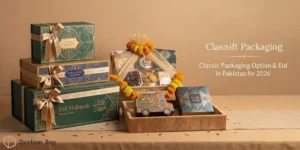
Gold, red, and maroon dominate wedding and Eid seasons because they represent celebration, prosperity, and generosity — core values in Pakistani gifting culture. This is precisely why Eid gifting packaging leans so heavily on rich, warm tones rather than cool or muted palettes. Meanwhile, during Ramadan, many brands shift toward deep blues, purples, and gold accents to evoke spirituality and reflection, a trend clearly visible in seasonal Ramadan packaging strategies used by local FMCG brands.
Understanding these emotional triggers allows brands to time their packaging color strategy around Pakistan’s cultural calendar rather than relying on static, year-round color choices.
📦 Best Packaging Colors for Different Industries in Pakistan
Different industries in Pakistan lean toward distinct color strategies based on what their customers emotionally expect. Food and bakery businesses generally favor warm, appetite-triggering tones — reds, browns, and warm yellows — paired with kraft or matte finishes to suggest freshness and authenticity, a combination widely adopted in bakery packaging solutions across the country. Cosmetic and skincare brands, on the other hand, tend to favor cooler, more minimalist palettes — soft pinks, blacks, whites, and gold accents — to project sophistication and trust, a strategy visible throughout modern cosmetic packaging trends for Pakistani skincare brands.
E-commerce and gifting sectors occupy a slightly different space. Since unboxing has become part of the customer journey, brands increasingly treat packaging color as a marketing tool in itself, using it to create shareable, Instagram-worthy moments rather than simply protecting the product. This shift is a major reason packaging is now widely recognized as one of the most cost-effective marketing tools available to Pakistani businesses.
Even seasonal and gifting businesses — think chocolate boxes, dry fruit packaging, and festive hampers — rely on strategic color choices to justify premium pricing. A heart-shaped chocolate box in deep red or gold, for example, immediately communicates romance and luxury, which is why such designs remain popular for gifting occasions throughout the year.
🌈 Color Trends in FMCG Packaging Heading Into 2026
Packaging design trends for 2026 show a clear shift toward two parallel directions in Pakistan: bold, culturally rooted color statements on one side, and quiet, minimalist palettes on the other. FMCG brands targeting mass-market consumers continue to favor loud, saturated colors — reds, yellows, and greens — because they perform better on crowded retail shelves and in fast-paced digital ads.
At the same time, a growing segment of urban, younger consumers is gravitating toward minimalist packaging design, favoring muted earth tones, soft pastels, and monochrome palettes that feel premium and understated. This dual trend means brands can no longer rely on a single color strategy across all customer segments — successful packaging now requires understanding which Pakistani consumer you’re speaking to, not just what product you’re selling.
Sustainability is also quietly influencing color choices. As eco-friendly packaging gains traction in Pakistan, natural kraft browns and greens are increasingly used not just for aesthetic reasons but to visually communicate environmental responsibility — a trend that’s reshaping how brands think about eco-conscious packaging design nationwide.
💡 Practical Tips: Choosing the Right Packaging Color for Your Brand
Selecting the right packaging color isn’t guesswork — it’s a deliberate process that blends brand identity, customer psychology, and category expectations. Start by identifying the core emotion you want your customer to feel the instant they see your product: trust, excitement, luxury, or comfort. That single emotional goal should guide every subsequent color decision.
Next, study your direct competitors’ shelf presence. If every competing brand uses red, standing out with a confident green or navy blue might actually help you get noticed rather than blend in. Testing matters too — even small businesses can run simple A/B tests using different packaging mockups on social media to see which color variant generates more engagement before committing to bulk printing.
Finally, always factor in cultural timing. A color palette that works brilliantly for everyday retail might need seasonal adjustment during Eid, Ramadan, or Independence Day campaigns, when Pakistani consumers respond strongly to culturally themed packaging. Brands working with a reliable custom packaging partner in Pakistan can experiment with these seasonal palettes far more efficiently than trying to manage color strategy in-house from scratch.
❓ Frequently Asked Questions
Q1: What color packaging sells best in Pakistan? Red, green, and gold consistently perform best across most categories in Pakistan. Red drives appetite and urgency for food products, green builds trust through natural and halal associations, and gold signals premium quality for cosmetics and gifting items.
Q2: Why is color psychology important in packaging design? Color psychology matters because customers form an emotional impression of a product within seconds of seeing it — often before reading any text. The right color can increase trust, urgency, or perceived value, directly influencing the buying decision.
Q3: Does culture really affect which packaging colors work in Pakistan? Yes, significantly. Religious symbolism, national identity, and festive traditions shape how Pakistani consumers emotionally respond to color. Green and white carry patriotic and religious weight, while gold and red dominate celebration-based gifting.
Q4: What packaging colors work best for food businesses in Pakistan? Warm tones like red, brown, and kraft-inspired earth colors work best for food packaging, as they suggest freshness, appetite appeal, and authenticity — especially for bakery, snack, and biryani packaging.
Q5: Are minimalist packaging colors popular in Pakistan? Yes, particularly among urban and younger consumers. Minimalist palettes using whites, blacks, and soft pastels are gaining popularity for cosmetics and premium lifestyle products, running alongside traditional bold-color FMCG trends.
✅ Final Thoughts
Packaging color psychology isn’t a design luxury reserved for big international brands — it’s an accessible, high-impact strategy that any business in Pakistan can use to influence buying behavior. From the appetite-triggering power of red in food packaging to the trust-building calm of green and blue in dairy and skincare, understanding what colors sell in Pakistan gives your brand a genuine edge in a crowded, competitive retail environment.
The businesses winning shelf space and repeat customers in 2026 are the ones treating packaging color as a strategic decision, not an afterthought. If you’re ready to apply these psychological principles to your own products, explore custom packaging solutions in Pakistan designed around your brand’s emotional identity, or browse the full product range to find the exact color, material, and finish that matches your customer’s expectations.