Kraft Paper Bags
 Kraft Standup Pouches
 Kraft Bowls
 Kraft Food Boxes
 SOS Paper bag
 Bottles & Jars
 Eco Products
 Accessories
If you’ve ever stood in front of a packaging catalog holding a handful of cashews, almonds, and pistachios, wondering which bag will actually keep them crunchy for months, you already understand why this topic matters. A standup pouch for mixed nuts isn’t just a container — it’s the thin barrier standing between your product and oxygen, moisture, light, and the eventual staleness that ruins both flavor and brand reputation. Whether you’re a home-based snack seller in Lahore or running a growing export business from Karachi, the pouch you choose shapes how your product looks on a shelf, how long it stays fresh, and how much trust customers place in your brand the moment they pick it up.
This guide walks through everything you need to know — from sizing your pouch correctly for different nut quantities, to understanding which materials actually protect freshness, to practical tips that most sellers only learn after a batch of nuts goes rancid too early. By the end, you’ll have a clear, no-nonsense framework for choosing packaging that performs as good as it looks.
🥜 Why the Right Pouch Matters More Than You Think
Mixed nuts are deceptively sensitive. Unlike dry snacks such as chips, nuts contain natural oils that react with oxygen and humidity, leading to oxidation — the chemical process responsible for that unpleasant “stale” or slightly bitter taste. A poorly chosen mixed nuts packaging pouch accelerates this process, sometimes cutting shelf life in half.
Beyond freshness, there’s the commercial reality: nuts are a premium product, and customers expect premium presentation. A pouch that looks flimsy, tears easily, or fails to reseal properly signals low quality before a single nut is even tasted. On the flip side, a well-structured, resealable, nicely printed pouch does something subtle but powerful — it makes the product feel more valuable than it might actually cost to produce. That perception gap is where smart packaging pays for itself many times over.
This is also why so many established snack brands rely on a kraft stand-up pouches format rather than flat poly bags — the standing structure alone improves shelf visibility in retail environments, which translates directly into more impulse purchases.
📏 Stand Up Pouch Size Guide – Matching Dimensions to Quantity
Getting the size right is where most new sellers either overspend on oversized pouches or frustrate customers with pouches that look half-empty. The good news is that nut packaging follows fairly predictable sizing logic once you understand the relationship between weight, density, and pouch volume.
Nuts are denser than, say, popcorn or chips, so they don’t need as much internal air space — but they do need enough gusset depth to sit upright without bursting the seams. Below is a practical breakdown that covers most common retail and wholesale quantities.
| Nut Quantity | Recommended Pouch Size | Typical Use Case |
|---|---|---|
| 50g – 100g | 9×14 cm or 10×15 cm | Sample packs, trial sizes |
| 150g – 250g | 12×20 cm | Standard retail snack pack |
| 400g – 500g | 14×20 cm or 16×24 cm | Family-size or gifting packs |
| 1 kg | 18×26 cm or 20×30 cm | Bulk retail or subscription boxes |
| 2 kg and above | 23×35 cm or 30×40 cm | Wholesale and B2B supply |
If you want a more granular breakdown that accounts for gusset width and seal margins specifically, this detailed kraft pouch sizing guide is worth a closer look before placing a bulk order.
How to Choose Size Based on Nut Type
Not all nuts behave the same way inside a pouch. Almonds and cashews pack relatively flat and consistent, while pistachios in shell take up noticeably more volume for the same weight. If your mixed nuts blend includes shelled varieties, it’s wise to size up slightly from the standard chart — roughly 10 to 15 percent more volume prevents the pouch from looking overstuffed or straining at the seams during transport.
Another often-overlooked factor is headspace. Leaving a small amount of empty space near the top isn’t wasted packaging — it actually protects the seal integrity and gives nitrogen-flush systems (more on that shortly) room to displace oxygen effectively.
🧪 Nuts Packaging Material Guide – What Actually Keeps Nuts Fresh
Size gets a product noticed, but material is what determines whether your nuts taste the same on day 60 as they did on day one. This is genuinely the part of packaging most sellers underestimate, so it deserves careful attention.
Kraft Paper Pouches
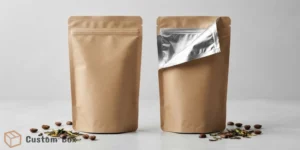
Kraft pouches have become the go-to choice for brands wanting a natural, premium, eco-conscious look. A plain kraft paper pouch alone offers decent moisture resistance but limited oxygen barrier protection, which is why most quality kraft pouches for nuts come laminated with an internal foil or PE layer. This combination gives you the rustic aesthetic customers associate with “natural” and “healthy” products, paired with functional protection. If you’re curious why so many food brands have shifted toward this format, this breakdown on why businesses love kraft standup pouches explains the reasoning in more depth.
Aluminum Foil and Laminated Pouches
For nuts intended to sit on shelves for extended periods, laminated structures combining PET, aluminum foil, and PE layers are the gold standard. This multi-layer construction blocks nearly all light, oxygen, and moisture penetration, which directly translates into longer shelf life and consistently crunchy texture. Many Pakistani exporters specifically rely on aluminium foil standup pouches for international shipments where extended transit times make barrier protection non-negotiable.
Clear Window and Mylar Options
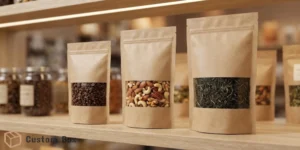
Sometimes visual appeal wins over pure barrier performance, especially for premium gifting or boutique retail. Pouches with a clear window let customers see the product quality before purchase, which builds trust instantly. The trade-off is a slightly reduced oxygen barrier in the window area itself. If you’re torn between presentation and protection, this comparison of pouches with or without a window lays out exactly where each option makes more commercial sense.
A quick side-by-side helps clarify the trade-offs:
| Material Type | Barrier Strength | Visual Appeal | Best For |
|---|---|---|---|
| Plain Kraft | Moderate | Natural, rustic | Short shelf life, local sale |
| Kraft + Foil Lamination | High | Premium, matte | Export, long shelf life |
| Aluminum Foil Pouch | Very High | Metallic, sleek | Humid climates, bulk storage |
| Clear Window Pouch | Moderate | High transparency | Gifting, retail display |
For a deeper technical understanding of how these layers actually block oxygen and moisture, this barrier properties guide is genuinely one of the more useful resources for anyone sourcing packaging seriously.
🔒 Features That Separate a Good Pouch From a Great One
Material and size form the foundation, but a handful of smaller features make the real difference in day-to-day usability. A resealable zipper closure, for instance, isn’t a luxury add-on anymore — customers genuinely expect it, especially for products they’ll dip into repeatedly over several weeks rather than finishing in one sitting.
Pouch thickness, usually measured in mil, also plays a bigger role than most people assume. Thinner films save on cost but risk punctures from sharp-edged nuts like pistachio shells, while thicker gauges add durability during shipping and handling. Gusset design matters too — a wider bottom gusset lets the pouch stand independently on shelves, which again circles back to that shelf-visibility advantage mentioned earlier.
For brands shipping internationally or storing large batches in warehouses, nitrogen flush packaging is worth considering. By displacing oxygen inside the pouch before sealing, this technique dramatically slows oxidation, extending shelf life well beyond what barrier film alone can achieve. It’s a small added cost that pays for itself in reduced spoilage, particularly for oil-rich nuts like walnuts and macadamias.
🌱 Food-Grade and Eco-Friendly Considerations
Food safety compliance isn’t optional, and it shouldn’t be an afterthought either. A genuinely food-grade standup pouch uses inks, adhesives, and film layers that won’t leach into the product or react with natural nut oils over time. This matters both for regulatory compliance and for simple customer trust — nobody wants to question whether their snack packaging is safe.
Sustainability has also moved from a nice-to-have to a genuine purchase driver, especially among younger, health-conscious buyers who tend to be the same demographic buying premium mixed nuts. Biodegradable and recyclable kraft-based structures let brands market themselves as environmentally responsible without compromising on protection, provided the lamination layers are chosen carefully. If sustainability is a priority for your brand positioning, exploring custom kraft pouches buying guide can help you balance eco-credentials with practical shelf-life needs.
📦 Why Custom Printed Pouches Give You an Edge
Generic plain pouches might save money upfront, but custom standup pouches for nuts consistently outperform them in brand recall and perceived value. Printing your logo, nutritional information, and brand colors directly onto the pouch transforms a simple snack bag into a recognizable product people actively look for on shelves or reorder online.
This is particularly valuable for mixed nuts because the category is crowded — walk into any supermarket and you’ll see a dozen similar-looking brown bags competing for attention. Distinctive printing, a well-chosen color palette, and clear labeling genuinely cut through that noise. Many businesses sourcing locally also appreciate browsing a full range of kraft standup pouches to compare finishes and sizes side by side before committing to a custom print run.
⚖️ Stand Up Pouch vs Flat Pouch – Which Wins for Nuts?
This comparison comes up constantly, and the honest answer depends on your sales channel. Flat pouches cost slightly less to produce and ship flatter, saving warehouse space during transit. However, they lose the self-standing display advantage and generally feel less premium in a customer’s hand.
Standup pouches, by contrast, justify a marginally higher cost through better retail visibility, easier shelf stocking, and that reassuring “fuller” feel customers associate with better value. For most mixed nuts brands selling through retail or e-commerce, the standup format tends to win on return-on-investment, even accounting for the slightly higher per-unit cost.
🛒 Buying Wholesale Pouches for Nuts the Smart Way
If you’re scaling beyond small batches, wholesale sourcing changes the economics significantly. Bulk orders typically bring per-unit costs down by a meaningful margin, but only if you’ve already validated your ideal size and material combination through smaller test runs first. Committing to thousands of units in the wrong dimensions is an expensive mistake that’s entirely avoidable with a bit of upfront planning.
It’s also worth comparing packaging formats beyond pouches altogether, especially for premium dry fruit lines. Some brands find that a tin box vs acrylic box comparison reveals interesting hybrid strategies — using pouches for everyday retail and rigid containers for gifting seasons. Similarly, understanding how to keep dry fruits fresh longer through proper storage handling complements whatever pouch material you ultimately choose.
💡 Final Takeaway
Choosing a standup pouch for mixed nuts really comes down to answering three honest questions: how much product you’re packing, how long it needs to stay fresh, and how your brand wants to be perceived on a shelf. Get the sizing chart right, lean toward laminated or foil-based materials for anything beyond a few weeks of shelf life, and don’t underestimate what a resealable zipper and good print design do for repeat purchases. Packaging might feel like a background decision compared to the product itself, but for nuts specifically, it’s doing more heavy lifting than most sellers realize.
If you’re ready to move from research to actual samples, it’s worth comparing a few material and size combinations side by side before locking in a bulk order — small test batches save real money down the line.
Ready to package your mixed nuts right? Browse our complete collection of food-grade, custom-printed standup pouches and get a free size consultation — browse our shop today.
❓ Frequently Asked Questions
What size standup pouch is best for 1 lb (450g) of mixed nuts? A 14×20 cm or 16×24 cm standup pouch generally fits one pound of mixed nuts comfortably, allowing enough headspace for sealing without looking understuffed.
Which material is best for nut packaging freshness? Multi-layer laminated pouches combining PET, aluminum foil, and PE offer the strongest oxygen and moisture barrier, making them the best choice for long shelf life.
What’s the difference between a stand up pouch and a flat pouch for nuts? Stand up pouches have a bottom gusset that lets them sit upright, improving shelf visibility, while flat pouches lie flat and are typically cheaper but less visually prominent in retail.
Do standup pouches for nuts need a resealable zipper? Yes, a zipper closure is strongly recommended since nuts are usually consumed over multiple sittings, and resealing keeps the product fresh between uses.
How long do nuts stay fresh in a standup pouch? With proper barrier film and nitrogen flush packaging, mixed nuts can stay fresh for 6 to 12 months, compared to just a few weeks in basic plastic bags.
Are kraft paper pouches good for mixed nuts? Yes, especially when laminated with a foil or PE layer, kraft pouches offer a natural premium look combined with solid moisture and light protection.
Can I get custom printed standup pouches for my nut brand in Pakistan? Yes, custom printing with your logo, nutritional details, and brand colors is widely available, and it significantly improves shelf recognition and customer trust.