Kraft Paper Bags
 Kraft Standup Pouches
 Kraft Bowls
 Kraft Food Boxes
 SOS Paper bag
 Bottles & Jars
 Eco Products
 Accessories
If you run a restaurant, cloud kitchen, catering service, or a small food stall, chances are deli containers have already found their way into your daily operations — whether you realized it or not. These humble, stackable, lid-fitted boxes have quietly become one of the most essential tools in the food packaging world, holding everything from creamy salads and spicy curries to fresh fruit cuts and soups without a single drop escaping. This guide walks you through everything a food business owner needs to know before placing that next bulk order — from materials and sizes to food safety certifications and sustainability choices.
By the time you finish reading, you’ll know exactly which type of container fits your menu, your budget, and your brand image. Let’s unpack this step by step.
🍽️ What Are Deli Containers and Why They Matter for Food Businesses
Deli containers are round or rectangular food storage units, usually paired with a snap-on or hinged lid, designed to hold both dry and liquid food items securely. Originally popular in delicatessens for storing sliced meats, cheeses, and salads, they’ve now become a staple across restaurants, catering businesses, cloud kitchens, and export-focused food brands across Pakistan.
What makes them so widely adopted isn’t just their simplicity — it’s their versatility. A single container style can hold a portion of biryani, a scoop of raita, or a slice of cake, depending on the size and lid type you choose. For businesses juggling multiple menu items, this flexibility translates directly into lower packaging costs and simpler inventory management. You can browse our full range of deli containers to see just how many size and style combinations are available for different food categories.
Beyond convenience, deli containers also play a quiet but powerful role in brand perception. A clean, leak-proof, well-sealed container tells your customer that you care about hygiene and quality — even before they’ve tasted the food inside. This matters even more if you’re building a delivery-first brand, where the container itself is the customer’s very first physical touchpoint with your business.
🧪 Deli Container Material Types: Which One Fits Your Business
Not all deli containers are built the same, and the material you choose will directly affect cost, durability, and customer experience. Broadly speaking, food businesses across Pakistan choose between three main categories: plastic, disposable, and biodegradable alternatives.
Plastic Deli Containers
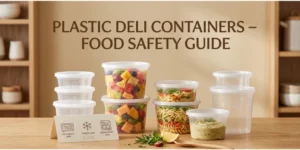
Plastic deli containers remain the most popular choice for restaurants and delis because they strike a balance between affordability and durability. Most are manufactured under food grade containers standards, meaning they’re safe for direct food contact and resistant to cracking under normal handling. Many are also microwave safe containers, which is a huge advantage for cloud kitchens reheating orders before delivery. If you want a deeper technical breakdown, our plastic deli containers food safety guide covers everything from BPA-free certification to safe reheating practices.
Disposable Deli Containers
For quick-service restaurants and takeaway-heavy businesses, disposable deli containers are often the more practical route. They eliminate the need for washing and returning containers, which saves both labor and water costs. Many disposable options are also freezer safe packaging, allowing kitchens to prep meals in advance and store them without worrying about container failure. Options like the disposable black plastic food container range are built specifically for this kind of high-turnover use.
Biodegradable and Compostable Alternatives
As sustainability becomes less of a “nice to have” and more of a customer expectation, biodegradable packaging and compostable containers have started gaining real traction in Pakistan’s food industry. These materials break down naturally after disposal, which appeals strongly to eco-conscious customers — especially in urban markets like Karachi and Lahore where environmental awareness around food packaging is growing steadily.
📏 Deli Container Sizes and Capacity: Finding the Right Fit
One of the most common mistakes food businesses make is ordering the wrong deli container sizes — either too small, leading to messy overflow, or too large, leading to wasted packaging cost. Getting the container capacity right, usually measured in oz or ml, means your portions look generous without your packaging budget taking a hit.
Here’s a quick reference table to help you match container capacity with common food business use cases:
| Container Capacity | Best Suited For | Typical Business Type |
|---|---|---|
| 6oz – 8oz | Sauces, dips, single portions | Cafés, fast food outlets |
| 12oz – 16oz | Salads, curries, soup and sauce containers | Restaurants, delis |
| 20oz – 24oz | Full meal portions, biryani, rice dishes | Cloud kitchens, catering |
| 28oz – 32oz | Family-size servings, bulk orders | Catering, event businesses |
If you’re running a delivery-focused kitchen, our range of hinged deli containers across multiple oz sizes is worth exploring, since hinged lids reduce the risk of spills during transit far better than loose-fitting alternatives. Getting this sizing decision right early on saves you from reordering headaches down the line and keeps your food presentation consistently professional, especially if you’re operating a cloud kitchen where every order travels before it’s opened.
🔒 Deli Containers with Lids: Leak-Proof and Tamper-Proof Features
A container is only as good as its lid, and this is where many food businesses underestimate the importance of proper sealing. Deli containers with lids that snap securely into place offer two critical advantages — they prevent leaks during transport, and they give customers visible peace of mind that their food hasn’t been tampered with before delivery.
Tamper-proof lids have become particularly important with the ongoing boom in food delivery apps across Pakistan. Customers increasingly expect airtight containers that arrive exactly as they were packed at the kitchen, with no spillage, no smell escaping, and no soggy packaging. Hinged designs, like our 24oz clear hinged deli boxes, solve this neatly because the lid is attached directly to the base, removing the risk of a lid popping off mid-transit.
Stackable food containers with secure lids also make life easier inside the kitchen itself. When containers stack cleanly in the fridge or freezer without tipping, staff spend less time reorganizing storage and more time actually preparing food — a small efficiency gain that adds up significantly over a busy service week. This same principle applies whether you’re running a small home kitchen or scaling toward the kind of operation covered in our complete packaging checklist for new food businesses.
🔍 Clear vs Black Deli Containers: Which Should You Choose
This is a question we hear constantly from restaurant owners, and honestly, the answer depends heavily on what you’re packaging. Clear deli containers are excellent for showcasing food visually — think fresh salads, colorful desserts, or dishes where presentation genuinely sells the product. Transparency builds trust too; customers can see exactly what they’re paying for before they even open the lid, which is why so many catering businesses lean toward clear options for buffet-style servings.
Black deli containers, on the other hand, tend to work better for dishes where color contrast matters, such as rice-based meals or curries, where the darker base makes the food itself pop visually. Black containers also tend to hide minor grease stains better, which some fast-food operators prefer for high-volume takeaway orders. We’ve actually broken this comparison down in far more depth in our dedicated piece on black food container vs transparent food container, which is worth a read if you’re still torn between the two.
Ultimately, many established restaurants keep both styles in rotation, using clear deli cups with lids for cold items and desserts while reserving black containers for hot, saucy mains.
📦 Wholesale Deli Containers for Restaurants and Catering Businesses
Once your food business moves past the trial phase and starts scaling, ordering in bulk becomes not just cost-effective but operationally necessary. Wholesale deli containers typically come at a significantly lower per-unit cost compared to retail packs, and for restaurants running multiple daily orders, that difference adds up fast over a single month.
Buying deli containers bulk also protects your business against sudden packaging shortages, which can otherwise bring order fulfillment to a complete standstill during peak seasons like Ramadan or wedding season. Catering businesses in particular benefit from this approach, since a single event can require hundreds of units in one go. If catering is a core part of your operations, our detailed guide on catering packaging in Pakistan pairs well with your deli container sourcing strategy, covering everything from aluminium foil trays to disposable serving options.
For restaurants specifically, pairing deli containers with the right takeout container standards matters too — consistency across your packaging line builds brand recognition, which is something our piece on best fast food packaging for restaurants in Pakistan explores in more detail.
🏆 How to Choose the Best Deli Containers for Your Food Business
With so many variables — material, size, lid type, color — narrowing down the right choice can feel overwhelming. In practice, this means starting with three simple questions: What type of food are you packaging most often? Is it primarily for dine-in, takeaway, or delivery? And what’s your monthly volume?
A few practical pointers worth keeping in mind:
- Match container thickness/durability to your food type — thicker walls for hot, oily dishes, standard walls for cold items.
- Prioritize FDA approved containers if you’re targeting export markets or health-conscious customers.
- Choose portion control containers for catering events where consistency matters more than flexibility.
- Always test a small batch before committing to a wholesale order.
If you’re just getting started and unsure where packaging fits into your overall setup, our broader resource on how to choose the right packaging for a food business offers a useful starting framework that applies well beyond just deli containers. And if your food business has export ambitions down the line, it’s worth glancing at our guide on packaging standards for exporting food from Pakistan, since compliance requirements differ significantly from local retail packaging.
❓ Frequently Asked Questions
What size deli container should I use for biryani or rice dishes? For full-meal rice dishes, a 20oz to 24oz deli container generally works best, offering enough room for rice, protein, and a side without overcrowding.
Are plastic deli containers safe for microwaving? Most food-grade plastic deli containers are microwave safe, but always check for the specific microwave-safe label on the packaging, since not all plastic grades handle heat equally well.
What’s the difference between deli containers and regular takeout boxes? Deli containers typically feature tighter, leak-proof lids designed for both liquid and solid foods, while standard takeout boxes are usually better suited for dry items like burgers or sandwiches.
Can I buy deli containers in bulk for a small home-based food business? Yes, wholesale deli containers are available in smaller bulk packs too, making them accessible even for home-based kitchens and small catering setups just starting out.
Are biodegradable deli containers as durable as plastic ones? Biodegradable and compostable containers have improved significantly and now offer comparable durability for most everyday use, though extremely hot or oily foods may still perform better in standard plastic containers.
🎯 Final Thoughts
Choosing the right deli containers isn’t just a packaging decision — it’s a direct extension of your food business’s reputation, hygiene standards, and customer experience. Whether you’re a small café experimenting with portion sizes or a catering business scaling toward wholesale orders, the right combination of material, size, and lid type can genuinely reduce waste, protect your food quality, and reinforce your brand every single time an order leaves your kitchen.
Ready to upgrade your packaging game? Explore CustomBox’s full deli container collection and find the perfect fit for your menu, your volume, and your budget — all backed by food-grade quality and fast delivery across Pakistan.