Kraft Paper Bags
 Kraft Standup Pouches
 Kraft Bowls
 Kraft Food Boxes
 SOS Paper bag
 Bottles & Jars
 Eco Products
 Accessories
Private label packaging is the fastest way to turn a generic product into a brand people recognize, trust and reorder. If you have ever wondered how to start private label packaging without wasting money on the wrong boxes, this private label packaging guide walks you through every step. It covers choosing a product, working with suppliers and approving your final print. It also shows how to launch a private label product that looks as good on a shelf as it does in an unboxing video. Whether you run a home kitchen brand, an online store or a growing retail line, the principles are the same. Let’s start with the basics and build up from there.
🧭 What Is Private Label Packaging?
Private label packaging is custom packaging made for a product that a third-party manufacturer produces but that you sell under your own brand name. You, the brand owner, control the look: logo, colors, structure, finish and messaging. The manufacturer handles production. Think of a skincare cream made in a partner facility, placed in a jar with your label, and shipped in a box printed with your artwork. The product might be shared across several sellers. The packaging is what makes it yours.
This matters because packaging is often the first real interaction a customer has with your brand. A plain, unbranded pouch says “commodity.” A well-designed one with a clear window, a matte finish and a clean logo says “someone cared about this.” If you want to see how packaging fits into a wider brand strategy, our guide on how to build a packaging brand in Pakistan goes deeper. For a simple definition of the box itself, read what is a custom packaging box.
🏷️ Private Label vs White Label Packaging
People mix these terms up all the time. White label packaging usually means a ready-made, generic design that many sellers can buy and simply slap their logo on. Private label packaging goes further. You usually have exclusive control over the design, materials and sometimes even the formulation.
In short, white label is faster and cheaper to start. Private label gives you stronger differentiation and better long-term brand value. Many small sellers begin with white label and move to full private label once sales justify the investment.
| Factor | White Label | Private Label |
|---|---|---|
| Design control | Limited, template-based | Full, custom artwork |
| Exclusivity | Shared with other sellers | Unique to your brand |
| Startup cost | Lower | Moderate to higher |
| Brand differentiation | Weak | Strong |
| Best for | Testing a market quickly | Building a long-term brand |
The table shows a clear trade-off. White label saves money early on. Private label builds an asset you own.
💡 Why Private Label Packaging Is Worth the Effort
Good packaging does three jobs at once. It protects the product, communicates your brand and influences the buying decision. Shoppers decide fast, often within a few seconds of seeing a product. Strong shelf appeal and a clear visual identity can be the difference between a click and a scroll-past.
There is also a profit angle. A product that looks premium supports a premium price. When two items sit side by side and one has refined, branded packaging, customers often assume it is higher quality, even before reading a word. That perception lifts your profit margins without changing the product inside. Packaging also works as a quiet marketing channel. Every parcel that reaches a doorstep is a small billboard, which we explore in packaging as a marketing tool in Pakistan.
Finally, private label packaging builds brand recognition over time. When customers see the same colors, shapes and typography repeatedly, your brand becomes familiar. Familiar brands get reordered, recommended and remembered.
🚀 How to Get Started with Private Label Packaging: Step by Step
Starting does not need to be complicated. Follow these steps in order and you will avoid the most common beginner mistakes. This section is the heart of any private label packaging for beginners plan.
1️⃣ Define Your Product and Target Audience
Before you think about boxes, get clear on who you are selling to. A premium skincare buyer expects something very different from someone buying bulk spices or snacks. Write down your target audience, their budget, where they shop and what they value. Then decide your product positioning: budget-friendly, mid-range, luxury or eco-conscious.
For example, a homemade chocolate brand targeting gifting customers might choose a rigid box with a transparent lid and gold accents. A weekly snack brand might choose a resealable kraft pouch. The product and the buyer should drive every packaging decision.
2️⃣ Choose the Right Packaging Format
Your product type decides your packaging structure. Dry goods, coffee and snacks often suit stand-up pouches. Creams, honey and pickles work well in jars. Gifts and cosmetics lean toward rigid or folding cartons. Online sellers need sturdy shipping boxes that survive courier handling.
Here is a quick way to think about it:
- Food and dry goods: pouches, jars, tin boxes, kraft bowls
- Cosmetics and skincare: folding cartons, jars, bottles, custom boxes
- E-commerce shipments: corrugated mailer and shipping boxes
If your product is food or coffee, browse the range of kraft stand-up pouches and read our custom kraft pouches buying guide to match the pouch to your product. For creams, honey or pickles, a round plastic jar is a practical, budget-friendly starting point.
3️⃣ Pick Materials That Fit Your Product and Budget
Material choice affects cost, durability and brand feel. Kraft gives a natural, earthy look. Corrugated board protects during shipping. Rigid board feels luxurious. Paperboard suits lightweight retail items. If you are unsure, our comparison of kraft box vs corrugated box explains which one holds up better and when. You can also learn how thickness is measured in our GSM guide for packaging.
Sustainability is no longer optional for many buyers. Eco-friendly packaging and sustainable packaging materials, such as recycled kraft and compostable options, signal responsibility and often appeal to younger customers. See the eco-friendly packaging options in Pakistan for ideas that look good and feel good.
4️⃣ Design Your Packaging
Design is where your brand story becomes visible. Start with a simple brief: your logo, two or three brand colors, a short brand statement and the key product details customers need. Then think about brand storytelling. What do you want the customer to feel when they hold the pack?
Strong private label packaging design usually follows a few principles. Keep the hierarchy clear so the brand name and product type are readable in a glance. Use whitespace instead of crowding every inch. Choose finishes with purpose: matte for a modern, soft look, gloss for vibrancy, foil stamping for luxury and embossing for tactile depth.
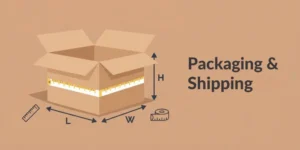
Your packaging printer will provide a dieline template, which is a flat map showing where folds, cuts and safe zones sit. Designers place artwork on this template so nothing gets cut off. Always measure your product accurately first, and our guide on how to measure a box (length, width, height) saves a lot of guesswork. If you work with food, how to design custom food packaging from scratch is a helpful companion read.
5️⃣ Find and Vet a Packaging Supplier
Choosing a packaging supplier or packaging manufacturer is the most important business decision in this process. A cheap quote means nothing if the quality is inconsistent or deadlines slip. Look for suppliers who offer both stock and custom options, show real samples and communicate clearly.
A good checklist when you choose a packaging supplier:
- Ask for physical samples, not only digital mockups
- Confirm printing methods, finishes and color accuracy
- Clarify minimum order quantity and per-unit pricing tiers
- Check lead time for first orders and reorders
- Review reviews, past work and customer support responsiveness
If you are local to a major city, these guides can help you compare options: best packaging suppliers in Karachi and best packaging suppliers in Lahore.
6️⃣ Request Samples and Build a Prototype
Never skip this step. A packaging prototype lets you hold the actual product, test how it closes, check fit and judge print quality. Request packaging samples in your chosen materials, and test them in real conditions. Fill them, drop them gently, stack them and, for food, check seal strength.
Many brands save money here by ordering a stock size first, then moving to a custom structure once demand is proven. A sample costs far less than a full production run of the wrong size.
7️⃣ Finalize the Design and Approve a Proof
Once the prototype feels right, finalize packaging design and send final artwork. The supplier will share a digital or physical proof. Read it slowly. Check spelling, barcodes, contact details, ingredient lists, colors and logo placement. This is your last chance to catch mistakes before they appear on thousands of units.
When you approve a packaging proof, you are confirming everything. Errors after approval are usually your cost, not the printer’s. Have a second person proofread it, ideally someone who has never seen the design.
8️⃣ Place Your First Bulk Order
When everything is approved, place a bulk order. Start with a quantity you can realistically sell within a few months. Over-ordering ties up cash, while under-ordering raises per-unit cost. A smart approach is a modest first run, then scale as sales data comes in. For brands watching their budget, our affordable custom packaging boxes guide offers practical ways to keep costs sensible.
💰 Private Label Packaging Cost and MOQ Explained
Two questions come up in almost every conversation: how much will it cost, and how many do I need to order? The honest answer is that both depend on several variables, so let’s unpack them.
📊 What Affects Private Label Packaging Cost?
Private label packaging cost is shaped by size, material, print complexity, finishes, order quantity and shipping. A simple one-color print on a stock-size kraft box costs far less than a full-color rigid box with foil stamping and a custom insert. Printing plates, die-cutting tools and setup charges are often one-time costs spread across your order, which is why per-unit price falls as quantity rises.
Customization level also matters. Stock packaging with a printed label or sticker is the cheapest entry point. Fully custom structures with unique dielines cost more but offer the strongest brand identity packaging.
📦 Understanding Minimum Order Quantity (MOQ)
The private label packaging minimum order quantity is the smallest batch a supplier will produce. It exists because printing, setup and machine time have fixed costs. MOQs vary widely by product type. Stock items can be available in small quantities, while fully custom printed boxes usually need higher volumes.
If you are a small business, look for low MOQ packaging options. Many suppliers offer printed stickers, labels, sleeves or small digital print runs so you can test the market without a large upfront bill. Consider these ways to stay flexible:
- Start with stock packaging plus custom labels
- Use digital printing for short runs
- Choose a standard size to avoid custom tooling costs
This table summarizes how common approaches compare:
| Approach | Typical MOQ Level | Cost Per Unit | Best For |
|---|---|---|---|
| Stock packaging + custom label | Low | Low to medium | Testing a new product |
| Digitally printed custom packaging | Low to medium | Medium | Small brands, short runs |
| Fully custom offset printed packaging | Medium to high | Lower at scale | Established or fast-growing brands |
In short, the more custom the design, the higher the commitment. Match your approach to your sales confidence. For broader budgeting ideas, see custom boxes for business in Pakistan.
🛒 Practical Examples of Private Label Packaging Ideas
Ideas become easier when you see them applied. Here are a few real-world scenarios that show how private label packaging solutions work in practice.
☕ A Small Coffee Roaster
A new roaster wants a premium feel on a modest budget. They choose black or kraft stand-up pouches with a one-way valve, add a clean label with the roast date and origin story, and include a small thank-you card. The pouch keeps beans fresh, and the story builds loyalty. Our guide on coffee packaging that preserves freshness and aroma explains the technical side.
🧴 A Skincare Startup
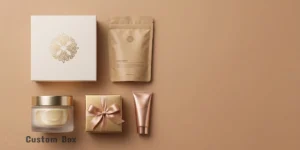
A skincare brand relies on trust and clean aesthetics. They pick a minimal folding carton with soft matte lamination, simple typography and a spot UV logo. Inside, glass or plastic jars carry matching labels. Our cosmetic packaging guide for skincare brands and custom cosmetic boxes offer more inspiration.
📬 An Online Seller on Marketplaces
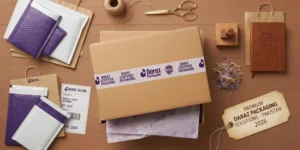
An e-commerce seller needs durability first and branding second. They use corrugated mailers with a printed logo, branded tape and tissue inside. Getting the size right avoids damage and shipping overcharges. Browse e-commerce boxes and read the complete e-commerce packaging guide for 2026. Marketplace sellers can also check best packaging for Daraz sellers.
🍫 A Home-Based Food Brand
A home chocolate or bakery brand wants gifting appeal. They use a window box with a ribbon, a branded sticker and a small ingredients label. Our packaging for homemade food business guide and the complete packaging checklist for a new food business cover the essentials.
✅ Compliance, Labeling and Quality Control
Looks matter, but rules matter too. Packaging compliance protects both your customers and your business. Depending on your product, you may need ingredient lists, net weight, batch numbers, manufacturing and expiry dates, storage instructions and contact details. Food and cosmetic products often face stricter labeling requirements, and exporters must also follow destination-market rules. If you plan to sell abroad, read packaging standards for exporting food from Pakistan.
Product labeling also includes barcode and UPC labeling, which is essential for retail and many marketplaces. Check that barcodes print with enough contrast and quiet space to scan reliably. Always verify local and international guidelines, including FDA and labeling regulations if you sell into the US, before you approve the final print.
Quality control deserves the same attention. Inspect the first delivery against your approved proof. Check color consistency, cut accuracy, seal strength and print alignment. If something is off, document it with photos and raise it quickly. A reliable supplier will welcome that feedback.
🎁 Make the Unboxing Experience Count
The unboxing experience is where private label packaging turns from a container into a memory. Customers share what delights them, and a thoughtful reveal can generate free word-of-mouth. Small touches go a long way: a branded sticker seal, tissue paper in your brand color, a short handwritten-style note or a QR code linking to usage tips.
Keep the customer experience consistent from box to product to follow-up message. If your outer box is premium but your insert looks cheap, the illusion breaks. For practical ideas, read how to create a memorable unboxing experience.
🧠 Common Mistakes to Avoid
Most packaging problems are preventable. The biggest one is skipping samples and approving a design from a screen alone. Colors look different on paper, and sizes feel different in your hand. Another frequent mistake is ignoring product fit, which leads to loose products that rattle or tight ones that crush.
Beginners also tend to overspend on complex finishes before proving demand. Start simple, test, then upgrade. Finally, don’t forget lead time. Packaging lead time can stretch when you add custom printing, finishes or imports, so order before you run low on stock, not after.
🏁 Conclusion: Start Small, Brand Smart
Private label packaging is not about having the biggest budget. It is about making clear, informed choices: know your audience, pick the right format and materials, vet your supplier, test samples, approve proofs carefully and scale at a pace your sales can support. Do that, and your packaging will work as a silent salesperson that protects the product and builds brand recognition with every order.
The best time to start is with a single product and a simple, well-executed design. Learn from your first batch, collect feedback and improve. Over time, you will build a brand that customers recognize at a glance.
📞 Ready to Launch Your Private Label Packaging?
Explore our range of custom packaging boxes and custom printed packaging boxes, request samples and get your brand-ready packaging moving today. Contact the CustomBox team to discuss your product, size, quantity and design.
❓ Frequently Asked Questions (FAQs)
What is private label packaging?
Private label packaging is custom packaging designed for products made by a third-party manufacturer and sold under your own brand. You control the design, materials, labeling and brand messaging, while the manufacturer handles production.
How do I start a private label packaging business?
Define your product and target audience, choose a suitable packaging format, select materials, create your design using a dieline template, and vet a packaging supplier. Then request samples, approve the final proof and place a small first bulk order.
How much does private label packaging cost?
Cost depends on size, material, print complexity, finishes and order quantity. Stock packaging with custom labels is the most affordable entry point, while fully custom printed packaging costs more upfront but gets cheaper per unit at higher volumes.
How do I choose a private label packaging supplier?
Look for suppliers who provide physical samples, clear MOQ and pricing, reliable lead times, consistent print quality and responsive support. Check past work and reviews before committing to a bulk order.
What is the MOQ for private label packaging?
MOQ varies by product and printing method. Stock items and digitally printed packaging usually have lower minimums, while fully custom offset printed boxes typically require larger quantities. Always confirm MOQ with your supplier before designing.
What is the difference between private label and white label?
White label uses generic, ready-made designs that several sellers can brand with their logo. Private label offers exclusive, custom packaging and stronger differentiation, giving you greater control over your brand identity.
Which packaging material is best for private label products?
It depends on the product. Kraft suits natural and food brands, corrugated suits shipping, rigid board suits premium gifting and paperboard suits lightweight retail items. Choose based on protection needs, brand feel and budget.